
[ 01 ] Manufacturing
AI vision and automation for manufacturing
Inspect every item, count everything, keep people safe, and connect the results to the line through PLCs, rejectors, tower lights and robots.
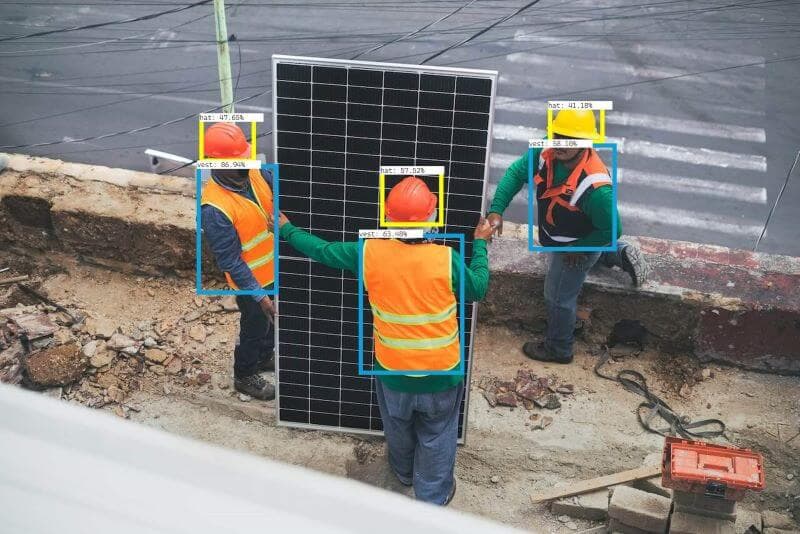
Who it’s for · Plant managers, QA/QC managers, production and process engineers, EHS managers, and the automation system integrators who work with them.
[ 01 ]Why Nabrio in manufacturing
Built for how your sites actually work.
- 01
Connects to your machines
Nara talks directly to PLCs and machines over Modbus, TCP/IP and MQTT, so a detection becomes a reject signal, a tower light or a robot move.
- 02
Runs on-premise, offline
Everything runs on your own hardware on the plant network, with no internet needed.
- 03
Trained on your products
When off-the-shelf models don’t know your parts or defects, train your own in Reva and deploy them to Nara in one step.
- 04
One platform for the plant
QC, counting, safety and logistics run on the same platform, often on the same device.

[ 03 ]Featured use cases
What manufacturing teams build on Nara.

 cameranara sees
Visual quality inspection
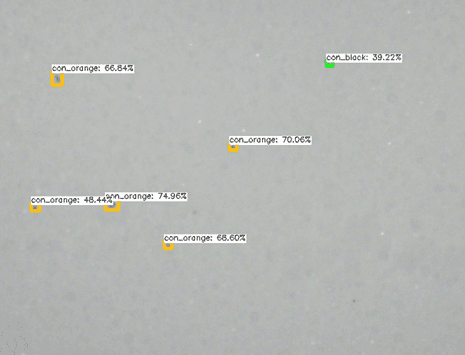
Visual inspection by people is inconsistent and tiring, and it cannot keep up with line speed or cover every item.
Foreign object detection
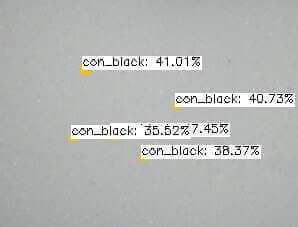
Contaminants in bulk product damage quality and customer trust, and manual sampling cannot cover the whole flow.
Item and pallet counting
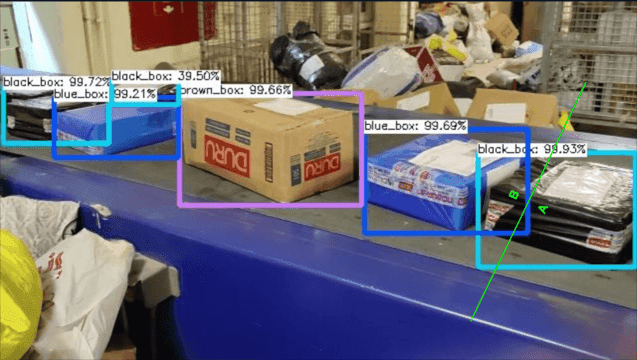
Manual counts of output, pallets, parts or batches are slow, error-prone and never real-time.
 cameranara sees
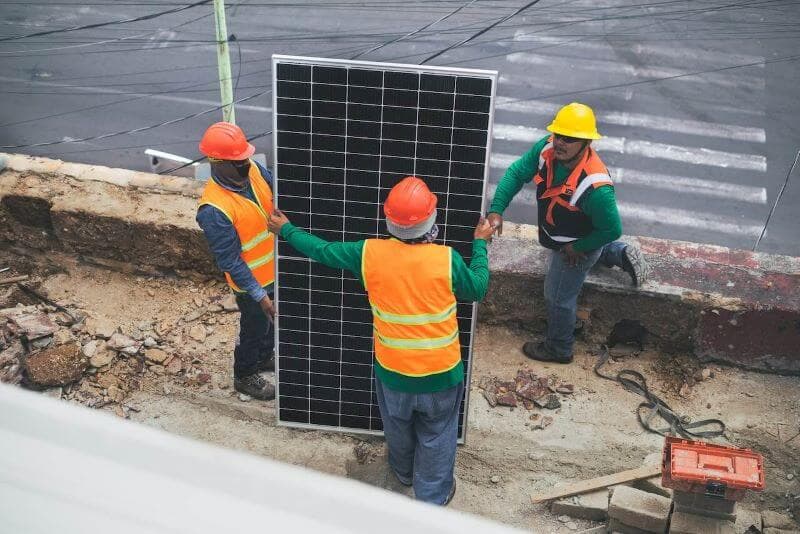
PPE detection
PPE rules (helmets, vests, masks, hairnets, gloves, coats) are hard to enforce at all times in every area.
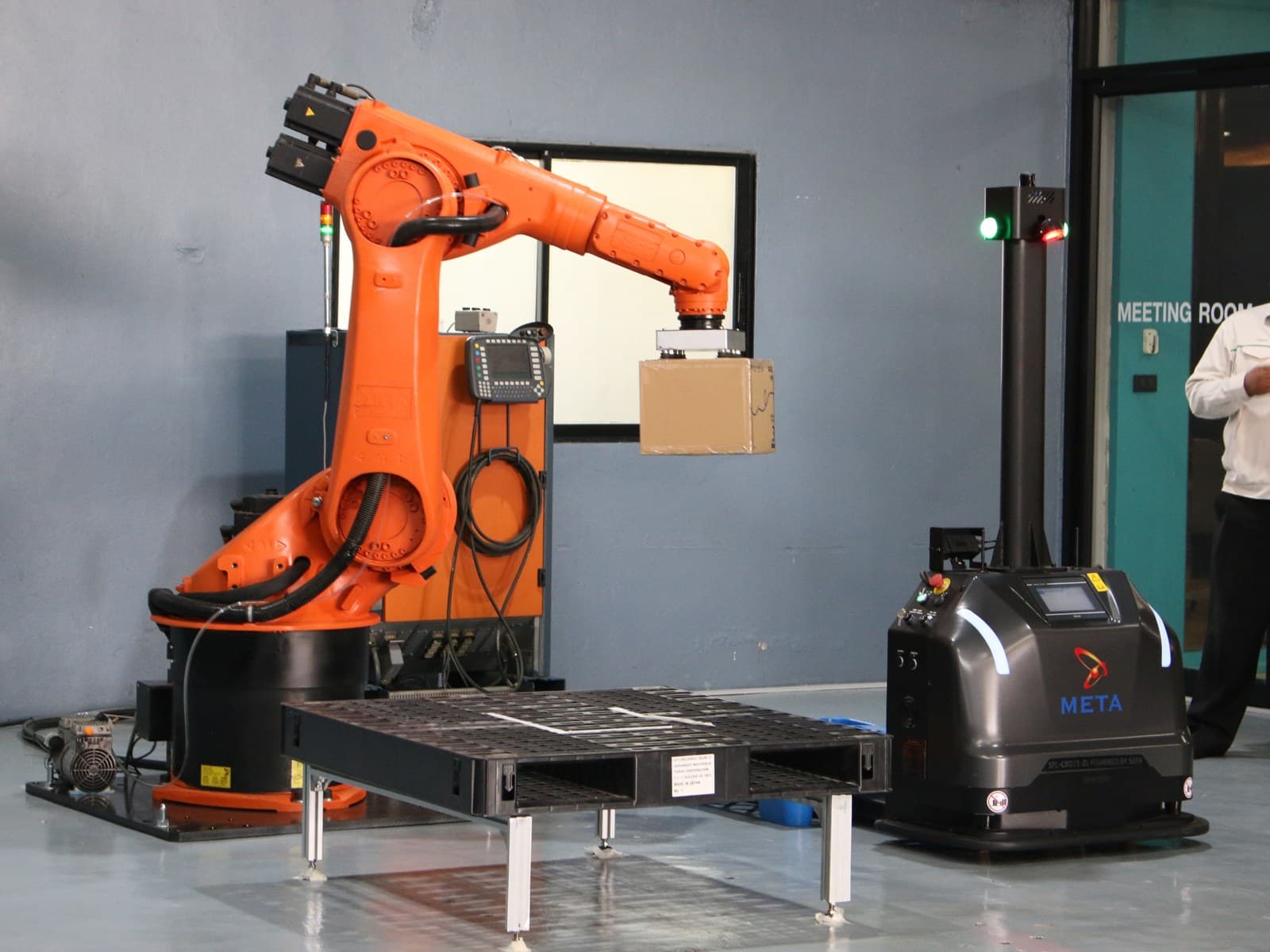
Robot and AMR orchestration
Robots and AMRs follow fixed programs and do not react to what is actually on the line.
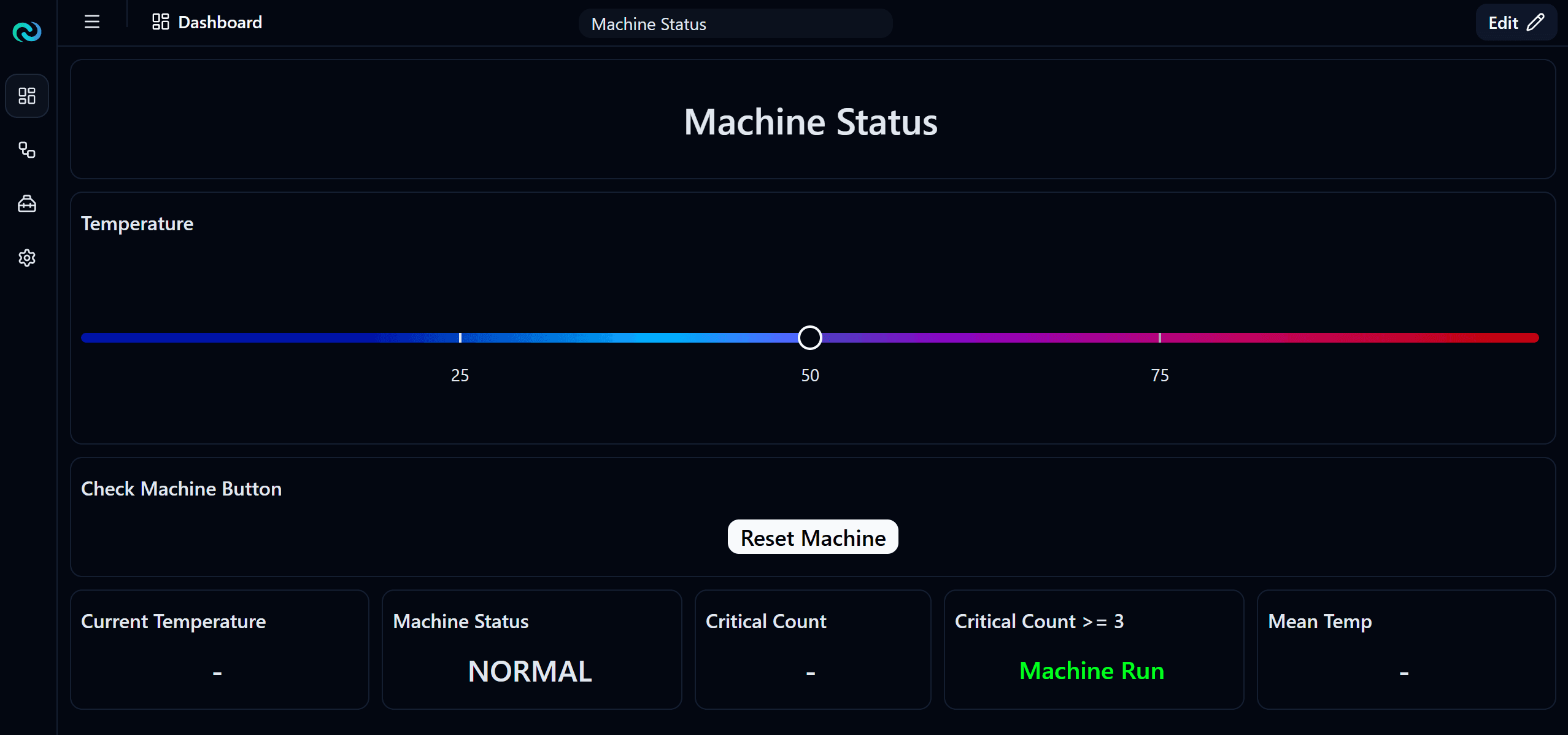
Machine status monitoring
Old machines have no network interface, so their state is invisible to managers.
[ 04 ]Every use case
The full list.
Everything in this sector that Nara can do, grouped by area. Use cases with their own page link through.
Production enhancement
- Counting items, products, parts, and palletsManual counts of output, pallets, parts, or batches are slow, error-prone, and not real-time.
- Automated quality inspection (QC/QA)Visual inspection by people is inconsistent, tiring, and cannot keep up with line speed or full coverage.
- Defect detection and rejectionDefects (cracks, chips, scratches, dents, discolouration, wet spots, missing seals) must be removed from the line automatically.
- Foreign object and particle detectionContaminants in bulk product (pellets, powders, food, rubber) damage quality and customer trust.
- Component, parts, and assembly verificationWrong, missing, or misplaced parts (screws, clips, labels, components) are found late, causing rework and recalls.
- Sorting and gradingSorting products by type, grade, or destination by hand is slow and inconsistent.
- Robot and AMR orchestrationRobots and AMRs follow fixed programs and do not react to what is actually on the line.
- Predictive maintenanceUnplanned machine downtime is costly. Most plants only react after a failure.
Process monitoring
- Analog and digital gauge readingOperators walk rounds to read and write down gauges and meters. Readings are infrequent and sometimes wrong.
- Machine and stack-light status monitoringOld machines have no network interface, so their state is invisible to managers.
- Process compliance monitoringSOP steps, cleaning routines, and emission limits must be followed and proven.
- Process, workflow, and operations analyticsManagers lack data on where time goes: bottlenecks, idle stations, movement waste.
- Backlog and queue monitoringWork-in-progress builds up unseen until it stops the line.
Logistics and inventory management
- Barcode, QR code, and label readingManual scanning is slow and misses items; wrong or unreadable labels cause shipping errors.
- Label accuracy inspectionA wrong lot number, expiry date, or allergen label means recalls and penalties.
- Inventory monitoringStock levels in racks, bins, and yards are only known at cycle counts.
- Packaging and container defect inspectionDamaged packaging, open seals, dents, or contamination inside containers reach customers.
- Parcel and conveyor processingParcels need to be identified, counted, and routed at speed.
- Licence plate recognitionTrucks entering and leaving the site are logged by hand at the gate.
- Container ID readingContainer numbers are recorded by hand at gates and docks.
Health and safety
- PPE detectionPPE rules (helmets, vests, masks, hairnets, gloves, coats) are hard to enforce at all times in every area.
- Access controlEntry to hygiene, hazardous, or secure areas must be limited to the right people, properly equipped.
- People in dangerous areasPeople enter robot cells, crane zones, or machine areas while the equipment is running.
- Near-collision alerts (people and vehicles)Forklift and pedestrian near-misses are common and rarely reported.
- Pathway blockage detectionBlocked fire exits, aisles, and walkways create safety and compliance risks.
- Fire and smoke detectionConventional smoke detectors react late in large or open spaces.
- Unsafe behaviour: hands off railings, phone useStairway falls and distraction (phones while walking or driving) cause many injuries.
- Height risk and climbing on railingsPeople climb on railings, racks, or machines, or enter height-risk areas without fall protection.
- Man down: falls and lying-down alertsA worker who has collapsed or fallen, especially when working alone, may not be found quickly.
- Regulatory compliance reportingAudits require evidence of PPE, hygiene, and safety compliance over time.
Other ideas
- Fill-level and cap or seal checks on bottles and containers
- Dimension and size checks with calibrated cameras
- Unauthorised smoking or vaping detection
- Fight or violence detection in large workforces
- Gas or chemical leak detection with infrared cameras
Predictive maintenance today uses machine and sensor data with rules and moving-window statistics. Machine-learning prediction trained in Reva is on our roadmap.
[ 05 ]Integrations
Connects to your systems.
PLCs and rejectors over Modbus and TCP/IP, tower lights, robot arms and AMRs, MES and SCADA over MQTT or HTTP, and ERP systems through HTTP.
All integrationsFAQ
Manufacturing: questions
Can Nara control our PLC?
Yes. Nara reads and writes Modbus registers and talks TCP/IP, so it can signal a rejector, stop a machine or set a tower light directly from a flow.
Does it need internet on the plant floor?
No. Nara runs on your own hardware on the local network. Our fertiliser QC deployment has run on-premise since March 2021.
What if the AI doesn’t know our product?
Train a model on your own images in Reva, with no code, and deploy it to Nara as a Nabrio Model (NAM) file. It works in the flow with no extra configuration.
Plan a proof of concept for your manufacturing site.
Download Nara and build your first flow in minutes, or tell us what you need to see and do, and we’ll show you how it runs on your own hardware.